Saturday, March 26, 2016

The Hottest Posts Everyone's Reading

This week the top post is about why notetaking is outdated and an alternative. Next up is a post that asks one simple question to determine if you are an innovative educator. Check it out and see if you are. After that is a post about free and impressive tools to enhance student writing. There are a few more to round out the top. Check em out below.

Entry
Pageviews
Mar 2, 2016, 
4845
Mar 13, 2016, 
3779
Mar 16, 2016, 
3692
Feb 28, 2016, 
2883
Feb 21, 2016, 
1978

I hope there's something that looks of interest to you.  If it does and you’re inspired I hope you’ll share it with others and/or leave a comment.

Wednesday, March 23, 2016

Use @Thrively for Letters of Recommendation, School Applications, Parent Conferences

It's that time of year for secondary teachers and guidance counselors. Students begin asking their teachers for letters of recommendations and/or are drafting their own applications for middle school, high school, or college. Thrively is a free digital resource that lends itself particularly well for such work.

With Thrively, students create a strength profile. This gives them useful language for their own applications. It also serves as a great tool to remind those writing applications of the student's strengths, which can prompt memories of specific incidents and activities to shine a light on and include in the recommendation.

Here is what my profile looks like:

Sunday, March 20, 2016

In @ScreenagerMovie - Much Ado abt Nothing

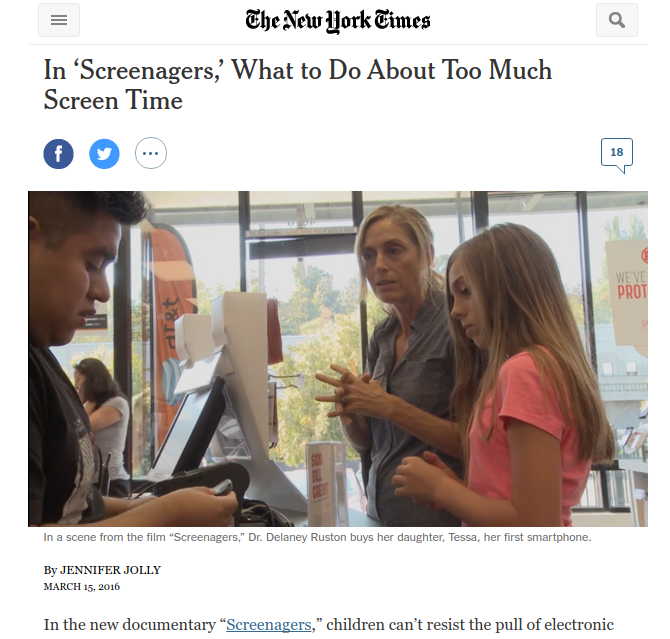
The New York Times this week covers a new documentary called “Screenagers” which takes a look at the tired story of children who can’t resist the pull of electronic devices, and their parents who don’t know what to do about it.


Innovative educators who spend time with these screenagers aren’t so worried.

Saturday, March 19, 2016

The Hottest Posts Everyone's Reading

The #EdTeh tools to support learning and strengthen relationships comes out strong again. Look for a version of this post in the upcoming print issue of Tech + Learning magazine. Next up is a post explaining why note taking is outdated and a better alternative. Making a debut this week as a strong third is one simple question you can ask yourself to determine if you are an innovative educator. There are a few more to round out the top. Check em out below.


I hope there's something that looks of interest to you.  If it does and you’re inspired I hope you’ll share it with others and/or leave a comment.

Wednesday, March 16, 2016

Collaboration, Tools, and Add-Ons. Oh My. Using G-Docs to Improve Student Writing

When students have access to Google Docs it’s like having a personal tutor by their side as they write. Innovative educators who empower their students to use these tools can support students in strengthening their writing skills even without the support of a teacher. This is important for innovative educators who take seriously, our job to develop independent learners.  Here are some ways Google Docs supports that.

Collaborate with Experts and others
The heart of G-docs is its power as a collaboration tool.  Support your students in safely and responsibly developing a learning network they can turn to review and edit their work. This might be family members. It could be experts. Perhaps it’s a mentor. With Google Docs you can invite anyone in the world into your classroom to support your students.

Tools
  • Voice to Text
    Did you know students can have their voice converted to text? Simply go to “Tools” in the menu bar and select “Voice to Text.” This is an excellent tool for both English Language Learners and emerging writers. They can watch as what they say is translated into text. Speaking of translation, look at the next tool.
  • Translate Document
    Also in the toolbar is an option to translate the document. This is powerful for speakers of languages other than English. They may want to begin their writing in their native language and translate it. We all know this will result in some translation errors. When the translated text appears, the student can review and revise for accuracy. This might also be a good tool for a student who wants to translate their writing for a parent or family member who is a non-native speaker.
  • Research
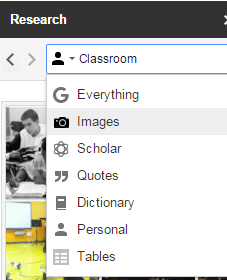
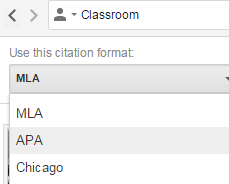
    Select “Research” in the tool menu and all the options in the left column of the chart below are at your fingertips. If you click the down arrow under the search bar, you can select your citation format.  

The options in the research bar are pretty self-explanatory.  Scholar brings you to scholarly articles on the topic. Personal searches your own documents and files. But what you might not know is that in addition to the pop-up preview, you will also get and insert link button to add a hyperlink of the site to your document as well as a Cite button to add a footnote to your document for that website.  While students can use the research tool to add footnotes to their document, if you they want a detailed biography page they’ll need an add-on, which brings us to our next section.

Sunday, March 13, 2016

Are You An Innovative Educator? Here's How to Find Out.

When I first began my career as an educator back in the 90s, I believed the problem with schools was that they were boring and the work was irrelevant. Those are indeed big problems, but what I later realized is we need to do more than make schools relevant and exciting. We must provide environments where students can engage in innovative, real-world experiences they find meaningful. When you do that you move toward becoming an innovative educator.  


Wonder if you’re an innovative educator? Consider this question:
"Do you inspire your students to implement and share their ideas and/or work in the real world or communicate their ideas to someone outside the classroom who can help those ideas or work come to life?"
If you can answer yes to that question, then you’re on the right track.
Students take their work to the streets and hold businesses accountable
for sustainable practices. Read how below.
Interesting and relevant just brings us part way there.  Innovative and real leads to meaningful learning. Let’s take a look at some examples: