Saturday, January 9, 2016

The Hottest Posts Everybody's Reading

Here’s the roundup of what's been popular on The Innovative Educator blog.


A new post takes the lead this week. It questions the role of the teacher in a tech-rich classroom. How might a teacher's role change? Check out the post and see if you agree with my take. Following that is a post that challenges the assumption that the teacher is the most important factor when it comes to learning. Next up is a post from my #VibeEdu tour of Israel that shares important lessons learned. Read it and you'll discover lessons like the importance of questioning authority or the value of being a part of a Youth Movement where nearly every young person spends time focusing outward to make their community a better place. 

There are a few more posts to round out the top including one that addresses why we need to stop freaking out about screentime and another that suggests we're ready to move beyond the factory model and teach students to use calendars rather than herd them from place to place with bells. Rounding out the top is a post that looks at the value of sharing a meal to learn about history and diversity. 

I hope there's something that looks of interest to you.  If it does, check it out. If you’re inspired use one of those icons below the post to share it with others and/or leave a comment.


Wednesday, January 6, 2016

What If Society Would Pay for Specialized Schools? #VibeEdu @VibeIsrael Tour Takeaways

Government schooling comes with strings of compliance, conformity, and dictatorship attached yet most of the elected officials determining what happens in these schools don’t send their own children to them. Even when they do, when you scratch beneath the surface you may find these are specialty schools that look very different from the rest. For example, in New York City, these are called Performance Based Assessment Schools. The students there don’t have the same requirements for the curriculum, standards, or assessments required by the rest of state. Instead they have more real-world and project based work and assessments. Montessori is a favorite school choice for many of the nation’s leaders. Waldorf schools are in favor for those who value an environment providing artistic development of pupils. The governor where I live sent his children to boarding school. Democratic schools provide another model that has become a popular choice among parents who value self-directed learning, that incorporates responsibility to community along with personalized learning for their children.


Why is it that all members of society don’t have access to these type of school that those with means select for their own children? This is the way it’s always been, but must it always be this way?


This is the question that came up in Israel nearly a quarter century ago. Citizens did not agree that if they chose to send their children to what they call a “unique” school, that this should mean no government funding is allocated to that student.  Parents mobilized for change so that funding was tied to pupils, regardless of the type of school, that their family felt was best. Today, for the most part in Israel, all schools receive per pupil funding from the government. Traditional schools are provided at no cost to families. Unique schools require families to pay a contribution of what comes to about $200 a month. Scholarships help poorer families pay the annual tuition. Students who come from truly impoverished backgrounds, have the opportunity to attend boarding schools like Mevo'ot Yam Youth Village. Immigrants and refugees have schools with substantial wrap-around services for students and their families such as the Bialik Rogozin School.

Monday, January 4, 2016

RIP to @Joe_Bower A Learning Inspiration

Joe Bower began inspiring me about 5 years ago when I came across his blog, "For the Love of Learning" where he shares his distaste of grading and blogs and his admiration for the work of Alfie Kohn. It didn't take long before his blog became one of my favorites. He was one of my 25 favorites on Twitter as well. How wonderful is it that via the power of a social media Twitter chat I could learn and connect with people like Joe as well as other innovative educators such as Will Richardson, John Spencer, Gary Stager, and Justin Schwamm?

I was shocked to learn last night that Joe was taken from us too soon and too young as a result of an unexpected, heart attack. Joe's writing was always informative and inspirational. I am deeply saddened that the live conversations can not continue. However, social media provides a great opportunity to learn from the knowledge and ideas he shared with others.  

If you want to learn from one of the best about progressive ideas in the areas of grading, assessment, and homework, check out Joe's book, De-Testing + De-Grading Schools, and his blog. At his blog you'll find this picture and description: 
joe.bower.teacher@gmail.com
I am Joe Bower (and that is Deborah Meier) and I teach in Red Deer, Alberta, Canada. I wish to challenge 'traditional' schooling while exploring more progressive forms of education. I intend on using this blog to uproot some of the most deeply rooted myths that continue to distract people from a love for learning. And I am going to have fun doing it!
In his last blog post, Joe wanted to instil the idea, that assessment was not about a number, but rather about a conversation with students and those who support them.  Though his words will live with us, he will be deeply missed by all those who knew him, face-to-face and/or will know him online. 

Sunday, January 3, 2016

How to Use Social Media to Change Perceptions - #VibeEdu @VibeIsrael Lessons

This is just one in a series of ongoing posts on the educational innovations in Israel. You can see additional coverage here.

If you're reading this blog you are likely involved with a school, district, museum or some other educational institution that is engaged in innovative practices. But do others know of the great work happening there? Is there a misconception about your school or district? Perhaps the community or even the world is not aware that in your district every student has a digital portfolio that can lead to academic and career success. Maybe your school has a Makerspace and 3D printing, but few know of the magic happening behind closed doors. Maybe the neighborhood is perceived as rough, but the the truth is that there is a strong, cohesive environment where the community comes together to ensure children are safe and watched after. What might you do to change or even drive awareness?


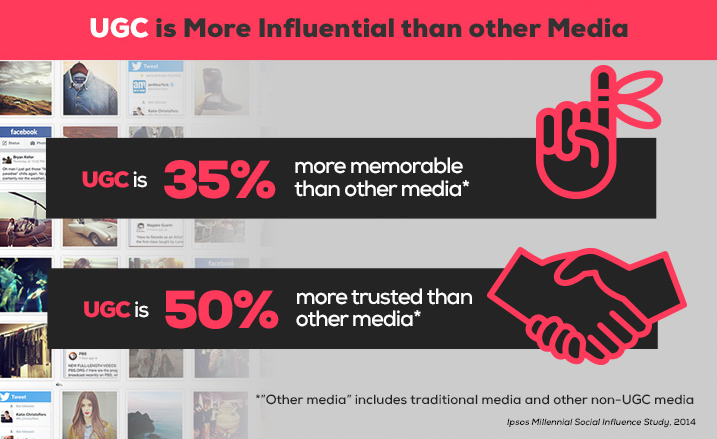
Typical practices might be to advertise in the local paper or on the local radio station. Maybe pass flyers out around the community.  Perhaps distribute a press release or maybe even buy a spot on a local television program. While those practices may have been the most effective in the past, today, there is a shift. When millennials want information, they don’t go to mainstream media, they look to UGC or “user generated content.” This means they don’t want to hear from the media. They want to hear what friends and peers have to say via updates and photos in places like Instagram, Facebook, Twitter, or blogs. And they spend a lot of time engaging with UGC from social media, in fact more time with any other media type. About five and half hours a day are spent with UGC and they trust and remember what they read from their peers more than any other source.


Check out the stats:
Source: Smart Blogs

Saturday, January 2, 2016

The Hottest Posts Everyone's Reading

Here’s the roundup of what's been popular on The Innovative Educator blog.


The top post is holding strong for a third week, and is the most popular post of the year. It challenges the assumption that the teacher is the most important factor when it comes to learning. Behind that is a post from my #VibeEdu tour of Israel that suggests that the dinner table, rather than a textbook or teacher, may be the best way to learn cultural awareness. 

There are a few more posts to round out the top including one that addresses the role of the teacher who uses tech to support learning and another about a strategy to ensure conferences, meetings, and really any even provide learners with a meaningful experience.

I hope there's something that looks of interest to you.  If it does, check it out. If you’re inspired use one of those icons below the post to share it with others and/or leave a comment.

Wednesday, December 30, 2015

Stop Herding Students By Bells - Teach Them These 4 Calendar Tips + Mistakes to Avoid

If there is anything innovative educators and their students need more of, it’s time. Always on the go, teaching and learning new things with new people in a variety of places. Those places may be physical spaces, phone calls, Skype, Hangouts, and more. Start the New Year off right by resolving to make calendar invites that save everyone time by being as complete and accurate as possible.


While creating a calendar invite might seem like common sense, this post was brought about, because the majority of calendar invites I receive contain at least one of the nine mistakes listed below. Don’t let that happen again. Give this post to new hires, secretaries, new partners, have it lying around the school or office. If you are a teacher, TEACH this to your students.

Important note for teachers and administrators: We must stop training students to move around according to the bells required for industrial age jobs and start teaching them calendar creation and management. 21st century schools need to ditch the bells and begin using the systems and technology of the modern world.


So, let's begin. Here is how to create a proper calendar invite.  


Hopefully you know how to get started, but if not, here is how in two common calendar formats.
Activity
Create
Complete
Outlook
Select "New Appointment"
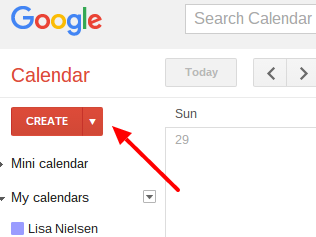
Google
Select "Create"