Showing posts with label #VibeIsrael. Show all posts

Sunday, February 7, 2016

Is Military Service The Key To College + Career Readiness? - My #VibeEdu @VibeIsrael Tour

This is just one in a series of ongoing posts on the educational innovations in Israel. You can see additional coverage here.


In the United States, youth have become what school critics like John Taylor Gatto refer to as infantilized. Their days and activities are structured by what adults tell them to do. They view their work as disconnected from them, having little relevance or meaning in their lives.


In many cases they are right. Their responsibility is to hand in work that most of the time an adult told them to do. Their final accomplishment is represented not by a body of work that is meaningful to them and shared with with others; instead, it is represented by a one-page transcript that encapsulates years of testing, assessing, and work that was “turned in.” This work has no real audience and almost never sees the light of day beyond the classroom or school.


While in school, these students have little responsibility beyond themselves, and have only limited control over where they go and what they do. Unlike previous generations, the percentage of employed teens has declined significantly from about 36% in the 90s to about 16% today for high school students and from about 60% in the 90s to about 47% today (Source: Child Trends Data Bank). Students move from the doors of high school to those of college where their first two years are usually prescribed. Majors are often chosen without much contact with what the course of study entails, and without meaningful experience that could help them make an informed decision.


About half of those who enter college exit without a degree. Of the half of those dumped out on the other end are unemployed or underemployed.  Those who graduate often don’t pursue careers related to their field studied in college. Those who do generally assimilate to the company culture operating as they have their whole lives. They do what they are told, how they are told to do it, when they are told it should be done, moving to and from their cubes under florescent lights. They go through the motions, unfulfilled. Just another cog in the machine.


To remedy this it is not uncommon for the unemployed, underemployed, and unfulfilled to go back to school. This makes sense, as many professions that previously required only a bachelor’s degree, now require advanced study. This extends the dependency of young people on school well into what had traditionally been early adult life. Individuals are prevented from taking up their own important work until a relatively advanced age. As a result, what we regard as adult maturity and independent life happens late. This affects schools little as they are not usually reviewed based on student employment. It affects students as potential candidates though. Back in the workforce, employers are left looking at candidates without much meaningful experience and little to show for all the time they’ve spent under a school’s umbrella. Employment rates for graduates is one concern. Finding work that is fulfilling is another. (Sources: Washington Post, Inside Higher Ed, Money, USA Today)


Does any of this sound familiar?


What if there was a way to change this scenario?

Tuesday, February 2, 2016

4 Reasons A Regional #STEM Lab Is Key - #VibeEdu @VibeIsrael Lessons Learned

This is just one in a series of ongoing posts on the educational innovations in Israel. You can see additional coverage here

Whether we call it STEM, (Science, Tech, Engineering, Math), STEAM (add Art), or STREAM
(add reading or research), countries across the globe are doing their best to develop students who are prepared to pursue careers and studies in the areas of Science, Tech, Engineering, and Math. Despite these efforts, few are accomplishing their goals. Efforts include creating STEM schools, AP classes, and virtual classes for schools where there are not enough students or qualified teachers for a class.  


What if there was a way to give students with the most interest and potential state-of-the-art opportunities with leading scientists and equipment in actual science labs?


In Israel, there is. It’s called HEMDA.


HEMDA is a regional center for science education that serves high school students in all of Tel Aviv. The HEMDA building ensures that all studies take place under lab conditions in industry-standard labs, with every single classroom a multipurpose space. This enables students to conduct experiments and use computers and teachers have access to the innovative and qualitative teaching strategies and methods.
Tehila Ben-Gai, Director of HEMDA explains the resource center.
Materials are stored in a central space and an be wheeled to classrooms on the periphery as needed.  

Wednesday, January 27, 2016

10 Practices to Help Bilingual Students Succeed from a Tel Aviv School via #VibeEdu @VibeIsrael Tour

This is just one in a series of ongoing posts on the educational innovations in Israel. You can see additional coverage here

New York City is indeed a melting pot, and while New Yorkers embrace its diversity, teaching in a school where students are not fluent in English, and often are not even literate in their own language, is challenging. Students are often unable to perform at grade level, not because of their capacity to learn, but because of their capacity to understand the language. What’s more, after just one year in the country, foreign-born students are expected to perform on the same standardized tests as native speakers. When they don’t, there’s a domino effect: the student is labeled a failure. His parent feels like a failure. His teacher a failure, and if there are many such students in attendance, the school is labeled a failure. The failure however is not the student, teacher, or school. The failure is the a school system that is failing these students.


Does any of this sound familiar?


What if there was a way to change this scenario?


As one of five bloggers invited to be a part of #VibeIsrael’s #VibeEdu Education Innovation tour I had the chance to visit a school where none of this is the case. The Bialik Rogozin School provides a unique model where refugees and children of migrant workers, some of them with little or no schooling at all, are integrated into Israeli society with common sense educational strategies that any school or district could adopt. 
Students at Bialik Rogozin Scohol connect through the common language of the arts.
Here they dance to music from various cultures.
Here they are:

Wednesday, January 6, 2016

What If Society Would Pay for Specialized Schools? #VibeEdu @VibeIsrael Tour Takeaways

Government schooling comes with strings of compliance, conformity, and dictatorship attached yet most of the elected officials determining what happens in these schools don’t send their own children to them. Even when they do, when you scratch beneath the surface you may find these are specialty schools that look very different from the rest. For example, in New York City, these are called Performance Based Assessment Schools. The students there don’t have the same requirements for the curriculum, standards, or assessments required by the rest of state. Instead they have more real-world and project based work and assessments. Montessori is a favorite school choice for many of the nation’s leaders. Waldorf schools are in favor for those who value an environment providing artistic development of pupils. The governor where I live sent his children to boarding school. Democratic schools provide another model that has become a popular choice among parents who value self-directed learning, that incorporates responsibility to community along with personalized learning for their children.


Why is it that all members of society don’t have access to these type of school that those with means select for their own children? This is the way it’s always been, but must it always be this way?


This is the question that came up in Israel nearly a quarter century ago. Citizens did not agree that if they chose to send their children to what they call a “unique” school, that this should mean no government funding is allocated to that student.  Parents mobilized for change so that funding was tied to pupils, regardless of the type of school, that their family felt was best. Today, for the most part in Israel, all schools receive per pupil funding from the government. Traditional schools are provided at no cost to families. Unique schools require families to pay a contribution of what comes to about $200 a month. Scholarships help poorer families pay the annual tuition. Students who come from truly impoverished backgrounds, have the opportunity to attend boarding schools like Mevo'ot Yam Youth Village. Immigrants and refugees have schools with substantial wrap-around services for students and their families such as the Bialik Rogozin School.

Sunday, January 3, 2016

How to Use Social Media to Change Perceptions - #VibeEdu @VibeIsrael Lessons

This is just one in a series of ongoing posts on the educational innovations in Israel. You can see additional coverage here.

If you're reading this blog you are likely involved with a school, district, museum or some other educational institution that is engaged in innovative practices. But do others know of the great work happening there? Is there a misconception about your school or district? Perhaps the community or even the world is not aware that in your district every student has a digital portfolio that can lead to academic and career success. Maybe your school has a Makerspace and 3D printing, but few know of the magic happening behind closed doors. Maybe the neighborhood is perceived as rough, but the the truth is that there is a strong, cohesive environment where the community comes together to ensure children are safe and watched after. What might you do to change or even drive awareness?


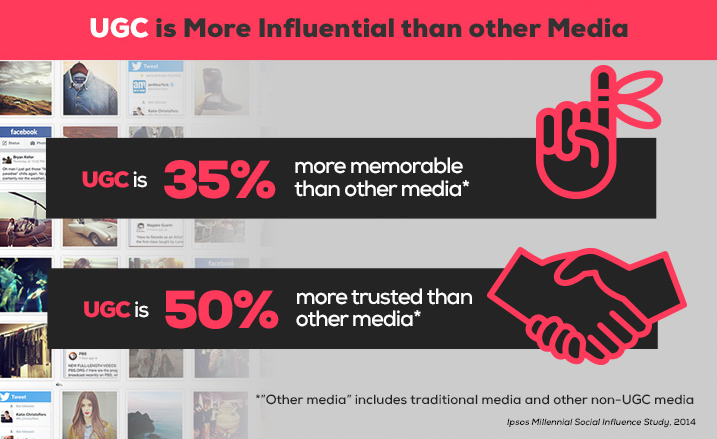
Typical practices might be to advertise in the local paper or on the local radio station. Maybe pass flyers out around the community.  Perhaps distribute a press release or maybe even buy a spot on a local television program. While those practices may have been the most effective in the past, today, there is a shift. When millennials want information, they don’t go to mainstream media, they look to UGC or “user generated content.” This means they don’t want to hear from the media. They want to hear what friends and peers have to say via updates and photos in places like Instagram, Facebook, Twitter, or blogs. And they spend a lot of time engaging with UGC from social media, in fact more time with any other media type. About five and half hours a day are spent with UGC and they trust and remember what they read from their peers more than any other source.


Check out the stats:
Source: Smart Blogs

Sunday, December 27, 2015

Youth Movements Allow Students to See A World Bigger Than Themselves - #VibeEdu @VibeIsrael Tour

This is just one in a series of ongoing posts on the educational innovations in Israel. You can see additional coverage here

In America, this week marks a holiday break. How are the young people in your life spending their time? Some adults lament the activities of, “Kids today.” They are staring at screens using social media. They are playing games. They are watching TV. But the outlook shouldn’t be so bleak. If students are not doing wonderful things, we shouldn’t blame kids, we should look at the opportunities adults are providing to them. What if there was an opportunity in your community for youth to spend free time in meaningful ways with other youth?


In Israel, there is.

Tuesday, December 22, 2015

15 Surprising Facts abt #Education In Israel - My #VibeEdu @VibeIsrael Tour

This is just one in a series of ongoing posts on the educational innovations in Israel. You can see additional coverage here Israel is the #2 country in the world for students going to university and Israeli Jews have among the lowest unemployment rates for those under 30. Israel is home to the most start ups and PhDs per capita and is known for a culture that breeds creativity. It seems it might be worth taking a look at some of their educational practices that result in such success. Fortunately, I had an opportunity to do just that serving as one of five edubloggers to take in part in the #VibeEdu Innovation in Education Tour organized by Vibe Israel, a non-profit nonprofit focused on changing the way people think and feel about Israel. I spent a week crossing the country, visiting places schools and other educational institutions and meeting with the students and adults that are responsible for ensuring Israel remains a hub of innovation, and entrepreneurship.   While I was there, I learned these surprising facts that are in play in their education system. As you read each one, forget what you've been told about what education should be or has to be. Instead, think about what practices could be put in place in your school, district, or community to help students there achieve success. #1 Schools are segregated Most schools are segregated by religion and race as follows: 1-Secular schools offer the state-education curriculum in Hebrew as set by the Ministry of Education 2-Orthodox schools offer state-religious education in Hebrew, with greater attention devoted to religion and Jewish culture 3-Arab schools offer the state curriculum in Arabic, in combination with a greater focus on Arab history, culture and beliefs.
#2 Boarding schools are for disadvantaged youth In America Boarding schools are usually for privileged. In Israel they are mainly for disadvantaged youth and funded by the government. About 9% of the schools are boarding schools. This post shares an example of what one school looks like: http://theinnovativeeducator.blogspot.co.il/...

#3 Progressive schools are government funded
Progressive schools such as Democratic, Montessori, and Waldorf are all part of the national school system + funded by the government on a per pupil basis. Most people I spoke with found it strange that the United States government did not allocate money to all types of schools on a per-pupil bases. They referred to these type of schools as “unique”

Sunday, December 20, 2015

14 Lessons in #Education - Takeaways from Israel Via The #VibeEdu @VibeIsrael Tour

This is just one in a series of ongoing posts on the educational innovations in Israel. You can see additional coverage here.


#VibeEdu Bloggers pictured in a classroom designed
to support students with attention deficit.
I learned a lot about learning after serving as one of five edubloggers participating in the #VibeEdu Innovation in Education Tour organized by Vibe Israel, a non-profit organization with a mission to promote Israel as a vibrant hub of creativity, innovation and entrepreneurship. After a week of crossing the country, visiting places, companies, and organizations, and meeting students and adults, I discovered innovative practices that are incorporated into their schools and culture. 

Below are some of the lessons I learned that contribute to making Israel the #2 country in the world for students going to university and resulting in one of the lowest unemployment rates for those under 30. As you read each lesson think about which you may be able to use to support student success where you work.


1) Give and You Shall Receive
If you want community support, you must support the community. The First Robotics Y Team 3211 of Yeruham needs donations from the community to fund these young makers. The students don't just engage in innovative projects, but rather the projects they select often support the community. They have made several small cars which they call bimbas for children who are unable to walk.  You can see two of the children in the pictures below.
This strategy seems to have paid off in more ways than one. The team took the gold at 2014 FIRST Tech Challenge in the US. The Robotics team has a goal to reach 2000 likes on their Facebook page. The students ask that you please check out what students in Israel are doing with robotics by visiting and liking their page at https://www.facebook.com/frc.3211/
-The Y Team FRC 3211-Yeruham

Monday, December 14, 2015

Is Sharing A Meal The Ticket To Teaching Cultural Awareness #VibeEdu #VibeIsrael

This is just one in a series of ongoing posts on the educational innovations in Israel. You can see additional coverage here

When Michael Biton took the role as Mayor of Yeruham, a small desert city, made up of about 10,000 mostly Israeli immigrants he had some challenges to realize one of his visions for the city. Known for it’s historical and archeological sites, the city was to become a sought-after tourism hot-spot. One that, among other things, offers sumptuous ethnic meals and gives visitors insight into the heritage, culture, and traditions of regular Israelis.


But first, he had to overcome a couple problems:


#1: The small town couldn’t afford any restaurants. The market was too small.
#2: There was a high unemployment rate for women


Fortunately, Biton had a recipe for success that included a combination of exploration, motivation, and innovation with a dash of chutzpah.
Mayor Michael Biton descending the stairs of the Yeruham Crater
to speak with students, educators, and edubloggers.
He recognized that there were some homes in city that had become hubs for community meals. From these homes the aroma of home-cooked, traditional recipes made mouths water. Fulfilling Jewish values of hospitality, caring, and solidarity, these families welcomed their neighbors into their homes.


It became apparent that these women had something to offer that might not only satisfy the appetite of tourists seeking delicious ethnic meals and insights into the Jewish culture, but it could also serve as a vehicle to provide added income for these unemployed women.


It wasn’t long before the Culinary Queens of Yeruham project was born. It has served as a win, win for both the community and those who come to visit.  There is perhaps no better way to learn about history, heritage, and culture than by experiencing a meal in the home of the people of that culture.

Sunday, December 13, 2015

Follow Me! Learn about Learning in Israel During My #VibeEdu Tour

I am halfway through Vibe Israel’s education tour. The purpose of the week-long trip is to bring together a diverse group of educators and bloggers (check em out here) who then go back and share with others about the experience.

Want to know what I’m learning? Here’s how you can keep up.

Twitter
Follow me on Twitter at @InnovativeEdu. I will send Tweets throughout the trip. Follow the Vibe Israel Twitter account at @VibeIsrael.

Instagram
The VibeIsrael instagram account will have excellent photos from the tour.


Facebook
Like the Vibe Israel Facebook page at https://www.facebook.com/vibeisrael

Hashtags
On all major social platforms (Facebook, Twitter, Instagram, etc.), the #VibeEdu and #VibeIsrael hashtags will help aggregate updates from the others on the trip too. Use Tagboard.com to see updates across platforms. 

The Innovative Educator blog
Stay tuned right here on this blog. I hope to find time to blog from Israel and I’ll be publishing reflections upon return. 

The Vibe Israel blog
Vibe Israel will share learnings via blog posts from all the education influencers on their blog at http://vibeisrael.com/blog. 

Embedded image permalink


Thanks to Edublogger’s Ronnie Burt for the inspiration and format of this post. Read his post here

Saturday, December 12, 2015

Could Surfboards + Wet Suits = Key to Supporting Disadvantaged Youth #VibeEdu

This is just one in a series of ongoing posts on the educational innovations in Israel. You can see additional coverage here

When you think of disadvantaged youth, it's not uncommon for images of teenagers hanging on the streets, drugs, incarceration and a dead end future to come to mind. But what if there was a way to help these young people find a new direction where their lives had meaning and purpose? 

On day one of my tour with Vibe Israel to learn about education in the country, I discovered this was a reality at a youth village in a place called Mevo'ot Yam. Here, a surfboard and a wet suit become a gateway to a future that is as wide open as the Mediterranean Sea that is the classroom to these students. Mevo'ot Yam Youth Village looks like a tropical resort, but instead it is home to disadvantaged youth who build crucial life skills such as goal setting, endurance, and inner confidence by learning to ride the waves of a surfboard and navigate the sea. Equally important is the realization for many of the youth that they can play a part in the shaping of the sea and the world.

One of the students (captured below) explained the plight of the clown fish made popular by the movie "Finding Nemo." After the movie, divers would risk damaging the sea ecosystem to capture these fish for sale. The solution to ending this problem was to breed clown fish so that the capture of those in the wild would no longer be necessary. This student learned an important lesson that is gaining popularity far and wide with the Maker Movement. It's better to make something (aka breed fish), than to take something. At the school they learn to breed endangered species that can help the oceanic ecosystem.

Wednesday, November 4, 2015

Global Awareness Via Social, Rather Than Mainstream, Media. #VibeIsrael My Next Adventure.

Historically, most people didn’t have much awareness of what was happening in other countries beyond what they read or heard in the media.  Of course there is more to a country than what we learn from secondhand sources, but until recently, there have been few ways to access this information.  


Vibe Israel (@vibeisrael), founded by Joanna Landau, is an a-political nonprofit organization based in Tel Aviv, has a plan to change that. They want the world to know there’s more to Israel than news related to the conflict in the Middle East. Their strategy is to use social media to share what Israel has to offer. They do this by inviting five influencers in specified areas (i.e. art, wellness, fashion, social entrepreneurship, sustainability) to visit the country and share what they learn with their followers. This enables citizens, with no political or corporate agenda, who have various areas of expertise, to tell stories to their followers.


I’m excited to have been selected as one of five, global education influencers to visit Israel this December and share what the country has to offer in the area of “education.”


What should I focus on when I’m there to bring back to those in my learning network?  


Here are some questions I’m interested in exploring: