Showing posts with label Why blog. Show all posts

Friday, March 18, 2011

Happy Birthday to The Innovative Educator - 2011

Happy Birthday to The Innovative Educator! You will be three years old tomorrow, March 19th.

It was exactly three years ago tomorrow that The Innovative Educator took its first step in an effort to publicly become a part of the conversation on learning innovatively. As I shared in my post Why I started a blog and why maybe you should too, this blog was born in great part due to the prodding of blogevangelist Will Richardson who I have since named my Blogfather. It was Will who I would run into at events and conferences who would ask, “Have you started sharing your ideas on a blog yet?” and who would write, “if you want your ideas to resonate with me and to be taken seriously, don’t just talk. Engage. Publish. Converse.”

I took Will’s advice and like any proud parent, I can say I’ve learned so much from the experience of giving birth to this new creation that has developed a purposeful and professional digital footprint consisting of more than 600  entries. Now, when I'm Googled, it is me and my blog that comes up on the front page. And, there are all sorts of other important footprints that The Innovative Educator has made. Its print is left on the front page of Google searches like: learning innovatively, cell phones in education, uschooling, passion driving or passion based learning, personal learning networks, ADD/ADHD, shortcomings of interactive whiteboards, and more.

I’ve watched my baby blog grow from no readers to an average of 125 unique visitors a day it’s first year to 336 a day last year to 636 a day this year.
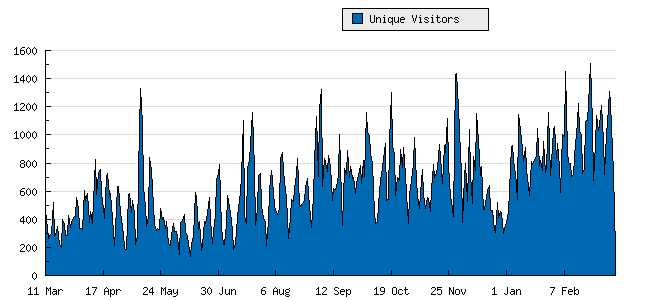
This year I published nearly double the amount of posts as last year with the help of contributors Jeff Branzburg and his provocative digital comics, Jacob Gutnicki and his on-the-ground insights and school-based stories and my newest contributors grown unschooler Kate Berring and unschooling mom Victoria Bergman.  

Among the most popular of posts from The Innovative Educator  this year are listed by category below:

Passion Driven Learning
Profile of a Passion-Driven Student 2011-Jan-2
Preparing Students for Success by Helping Them Discover and Develop Their Passions 2010-Dec-25
Keeping it real. Ideas for Schools, Educators, and Students. 2011-Mar-3
The Answer to Teacher Retention: Find Passion (Not Data) Driven Schools 2011-Feb-13
Differentiating Instruction is NOT Hard if We Tap into Student’s Passions! 2010-Nov-22

Harnessing the Power of Cell Phones for Learning
5 Steps to Harness the Power of Cells in Education Today 2010-Jun-23
Innovative Ways to Engage Learners with Cell Phones Using Research-Based Strategies  2010-Apr-22
It's not a question of if, but when your school will allow cell phones for learning 2010-Jun-24
6 Ways to Use Cell Phones to Strengthen the Home-School Connection 2010-Aug-19 

Unschooling
Learning to Read without School 2011-Jan-9
I Learned How To Write Without School 2011-Jan-27
Profiles of Adults Who Were Passion Driven Students - Their Secret? They Didn’t Go To School. 2011-Jan-8
20 Characteristics I’ve Discovered about Unschoolers and Why Innovative Educators Should Care 2011-Jan-7
We would prefer not to take your tests. 2011-Jan-17
Hey Teacher! Leave Us Kids Alone!!!- There’s A School for That! 2011-Jan-17
What if kids designed their learning? Here are some resources to get started. 2011-Jan-21
5 things I learned about boredom from unschooling 2010-Dec-1

ADD/ADHD
Cure ADHD without Drugs with These Resources from Doctors, Educators, and Parents 2011-Feb-5
Passion (Not Drugs) As Treatment for ADD/ADHD 2011-Jan-25
Sir Ken Robinson Sets Us Straight On What Is Wrong with Education 2011-Jan-21
The War on Kids. Zero Tolerance 2011-Jan-15

Education Reform
20 Ideas for Parents Sick of Waiting for Superman and Tired of Having Their Children Race to Nowhere 2011 -Feb 21
Why Can’t We Empower Parents with the Dollars to Reform Education? 2011-Mar-1
Reforming Reform - Five Ideas for Improving Education 2011-Mar-2
10 Proven Strategies to Break the Ban and Build Opportunities for Student Learning 2010-Nov-3
5 Pieces of Advice for Lawyers Trying to Scare Educators Who Think Outside The Ban 2010-Sep-24

Thursday, March 19, 2009

Happy Birthday to The Innovative Educator !

Happy Birthday to The Innovative Educator! You are one year old today.


It was exactly 12 months ago that The Innovative Educator took its first step in an effort to publicly become a part of the conversation on educating innovatively. As I shared in my post Why I started a blog and why maybe you should too, this blog was born in great part due to the prodding of blogevangelist Will Richardson who I have since named my Blogfather. It was Will who I would run into at events and conferences who would ask, “Have you started sharing your ideas yet on a blog?” and who would write, “if you want your ideas to resonate with me and to be taken seriously, don’t just talk. Engage. Publish. Converse.”


I took his advice and like any proud parent, can say I’ve learned so much from the experience of giving birth to this new creation that has developed a purposeful and professional digital footprint consisting of 124 entries. Now, when I Google myself, it is me, not one of 1000s of others, who comes up on the front page. And, there are all sorts of other important footprints that The Innovative Educator has made. Its print is left on the front page of Google searches like: Educating Innovatively, cell phones in education, technology education quotes, teaching in the 21st century ideas, personal learning network, Renzulli learning to differentiate instruction, and more.


I’ve watched my baby blog grow from no readers to an average of 125 a day. During the Inauguration she received international attention with more than 6,000 hits a day from people interested in teaching the inauguration in innovative ways. I have watched The Innovative Educator’s ideas about educator voice and cell phone use gain attention from the press and its ideas about 25 Random Things Innovative Educators Can Do To Enhance Teaching and Learning become the most popular of all it has shared. You also now have Authority! Growing from being just one of millions of blogs to gaining a credible 38 authority rating on Technorati. But, even before anybody was reading The Innovative Educator, she enriched my life with opportunities to practice my writing skills and articulate my thoughts.


The Innovative Educator has helped me understand the power of influence and given me an outlet to share with my readers about what I love most – “Educating Innovatively!” So, happy first birthday… and many more!


Editor’s note:

I want to thank my blogbrother, Jim McDermott for being the inspiration for this post. I used much of his witty post word for word right here in mine. He perfectly articulated my sentiments, so I didn’t mess with success. He continues to be an incredible motivation and inspiration in my blog.

Friday, May 9, 2008

Attention is influence and the importance of educators having a voice

I’ve learned so much from my personal learning network and in particular my colleague The Techomnivore who was recently asked to contribute to Technology and Learning’s DIGITAL LEARNING ENVIRONMENTS blog where he writes about using gaming to enhance teaching and learning. He is a terrific writer with a lot to share and very smart guy who I continually learn from in person and from subscribing to his blog Tales of a Techomnivore. When he got this gig, I just had to ask, “So, do you get paid for your weekly blog column in Technology and Learning?” He said he did not. So I pried further and said, “What is your motivation to do it then?” He said he was recently somewhere and heard someone say, “attention is influence. “ This is important to him because he has a passion for discovering ways technology can enrich our lives and an even higher goal of giving every child the opportunity to succeed. He shares these ideas around the world through his work, at his DIGITAL LEARNING ENVIRONMENTS blog, his Tales of a Techomnivore blog, and through speaking at conferences. As a result there are educators, students, and parents benefiting from his fantastic ideas to establish an engaging and relevant curriculum.

Thursday, May 8, 2008

Ideas for Making a Purposeful and Professional Digital Footprint

The Innovative Parent explains there are two different types of digital footprints: Active and Passive. Passive footprints are not created deliberately by the user such as information uploaded to the internet by way of companies providing public information. An active digital footprint is very different. It is the deliberate creation of this footprint. Facebook and MySpace are perfect examples of this. Bloggers also have active digital footprints as they write to share thoughts, ideas, photos, videos and more to carve out their prints.

In a recent post innovative educator Will Richardson shared a story about a teacher with a provocative active digital footprint. He quoted this from a Washington Post article on teachers with Facebook/MySpace sites:

Alina Espinosa, a teacher at Clopper Mill Elementary School in Montgomery, had written on her Facebook page in the “About Me” section: “I only have two feelings: hunger and lust. Also, I slept with a hooker. Be jealous. I like to go onto Jdate [an online dating service for Jewish people] and get straight guys to agree to sleep with me.”

Asked about the page, Espinosa said: “I never thought about parents and kids [seeing it] before. That’s all I’m going to say.”


This begs the question, how can innovative educators begin preparing students, parents, and colleagues to create a positive, appropriate, and respectable digital footprint if they themselves are unaware their digital footprint will be viewed by unintended audiences, and are unaware of, and not purposeful about, their own digital footprint? I have five ideas to enable innovative educators to begin developing and modeling the establishment of a responsible, respectable, and professional digital footprint.


Five ideas to enable educators to develop and model a purposeful and professional digital footprint.

1-Model responsible footprinting with your own practices in blogging, commenting, social networking, and picture posting.
2-If you have established a professional blog, share it widely and proudly such as placing it in your email signature (if your employer will let you) and as Jeff Utecht suggests include your blog url when you comment on others blogs and in other forums. This enables others to see best practices and is a great way to get the conversation started.
3-Google yourself (aka ego surfing). If you have something posted online that you'd be uncomfortable having a current or future student, parent, colleague, or employer find, delete it (if you can) or request that it be deleted. There are ways an aggressive internet detective can still find this information, but most won't go through the trouble and the mere fact that you deleted it shows some level of responsibility.
4-If you do have online personal information and/or interests you wouldn't want discovered, use an unidentifiable screen name/avatar. This means you may need to update your screen name/avatar in your existing online presence.
5-Engage in the conversation and professionally comment, reply, and present online, onsite, and at conferences.


Hopefully these ideas are helpful for some readers and I’d love to know others experiences with negative or positive repercussions from digital footprints. If this topic is of interest click the following links from a 20-something career expert who shares another perspective on why the lines between personal and professional lives should be blurred and why the whole idea of our lives being available for public display is actually pretty cool.

-----------------------------------------------------------------------------------------

Who's Writing about this entry?

Greg's Weblog

Responsible digital footprints

| Permalink


Wednesday, May 7, 2008

Mandate Against Professional Blog URLs in NYC DOE Signature

Apparently I prompted a mandate by the NYC DOE that no employee can have their blog url in their email signature. I find this particularly upsetting because as the PD manager for the Office of Instructional Technology for the NYC DOE I think having a blog is a great way to get the digital footprint conversation going as well as model best practices for using 21st Century tools to build professional learning communities and personal learning networks that support the work we do. In fact, I think it would be terrific if all educators with professional blogs celebrated and shared their work in their email signatures. Heck, I think it would be great if educators were just consumers in the blogosphere and if we held them accountable to standing behind a blog url in their signature…that would be a fantastic professional learning vehicle for them and modeling tool for their students and/or staff.

But alas, as of today I received a call informing me that as a follow up to the standardization email I received last month, legal has advised that if you work at the NYC DOE your blog url must be removed from your signature. Additionally, I will have to add a disclaimer to all posts and comments (that I will receive soon from legal) that goes something like...the views expressed here are my own and do not represent that of the DOE. What happened to the idea of celebrating the successes among us and promoting the idea of authentic publishing and sharing and collaboration of ideas? I'm okay with a disclaimer on my blog (although I think a disclaimer on comments is extreme), but not so happy on the mandate to squelch the sharing of the existence of my blog ideas by eliminating the url from email signatures.

I'm well aware of other ways to share my blog url, but putting it along with my contact information helps identify me with more than just and email and phone. It enables me to connect my name to my ideas in a signature which enables my network to learn and grow as well. Yes they are my ideas, but so are all my emails. If people want to brand themselves (with a professional blog or an ethical quote for that matter) and share and establish their safe, appropriate, and acceptable professional digital footprint...shouldn't they be able?

Thoughts? Opinions?

Follow the Classroom 2.0 conversation on this topic here.

Further Reading from Joyce Valenza.

What Not to Blog Part 1

What Not to Blog Part 2

Friday, March 21, 2008

Why I started a blog and why maybe you should too

I shared with several friends, family and colleagues that I was starting a blog and while I got several, “It’s about times,” and “Congrats!,” I was surprised by the equal number of responses that went something like this: “Why do you want everyone to know your business?” “You better make sure you stay out of trouble.” “Be careful! A lot of people who have blogs get fired for sharing their personal lives.” Why do you want to keep a blog? Diaries should be kept private.” “Why do you want to publish your life online?”

You get the picture.

I thought by now people realized that blogs were often "more than they were in the days when people inappropriately posted their personal exploits and diaries online. I thought people, or at least my people, my friends, realized the value of having an online presence. While several of them did, many, many still did not. So, I explained to them what I’ve learned...
Having a digital footprint is crucial for your career if you want to establish credibility as an expert. While I have tons of work that lives online, there is nothing of my choosing directly pointing to me, what I believe, and what I do. As a result, I don’t have a real digital footprint and that means while I’ve done a lot of good work for my employers I have nothing that identifies my work, who I am, what I believe, and what I do.

My three primary inspirations to begin this blog were Penelope Trunk who eloquently explains why Blogging essential for a good career, Lucy Calkins who through the TCRWP taught me the value of helping students learn to love writing their own words, rather than being assigned to write about the words of others and Will Richardson who in his post URGENT: 21st Century Skills for Educators (and Others) First complains…

For all of the experts and scholars and pundits who were staking out a part of the conversation about educational reform, I couldn’t help leaving there wondering how many of them really have a sense of the changes that are afoot here. I looked up a whole bunch of the names of the presenters and I could only find a handful that have any real Read/Write Web footprint that would allow me to consider them to be a part of my network. And worse, it was painfully obvious by their death by PowerPoint presentation styles that their own adoption of technology as a communication tool not to mention a networked learning tool left a great deal to be desired. The governors, the state superintendents, the consultants…from none of them did I get the sense that they could give a great response to a request to model their uses of technology to teach and learn effectively, especially in the context of networks.

Will went on to say,
if you want your ideas to resonate with me and to be taken seriously, don’t just talk. Engage. Publish. Converse. Add your voice to the network of people who are living these ideas every day.

So it’s about time, I stop talking the talk and start walking the walk and I’m happy to say that I’ve convinced two of my closest friends to follow suit and start their own blogs too at The Innovative Parent and Woman Business Owner. I hope to inspire many others as well.

If you want to share your blogging experiences or need some help or advice, please comment here or email me at lnielsen@schools.nyc.gov and I’ll share how you can get started by quickly and easily setting up a blog, wiki, social network, and email with just the right name and focus.

--------
Additional reading: Why Every Teacher Should Blog from the Drape's Takes blog.

Wednesday, March 19, 2008

The Innovative Educator takes its first step

I’ve spent as long as I can remember being an educator, student or both, passionate about authentic, meaningful, fun, and relevant schooling. In first grade my school informed my mother that I spent most days sleeping and they were concerned I had a learning disability, though in those days, I believe my teacher told my mom she thought I was “retarded.” Frantic my mother took me off to UCLA medical center for a battery of tests where they advised my mother and my school that I tested much higher than average in all tests and my issue was boredom and under stimulation.

They recommended I skip a grade. That helped a little, but I spent most of my school years in what felt like a meaningless, dreary torture chamber. My teachers promised that though what they were teaching might not seem important then, I would need it when I grew up. 

I couldn’t wait to grow up and figure out why all this stuff was important. I hurried on my way to growing up, graduating college at 19. I didn’t know how it was that growing up would teach me the meaning of what seemed an irrelevant school experience, but I was excited to finally have the mystery solved.

Once in the real world, I realized it was all a farce. There was very little that I learned in school that was valuable…especially after 4th grade. I felt cheated and disappointed that I had spent countless excruciatingly BORING years in classrooms and had nothing to show for it but a bunch of diplomas and boxes of reports graded by my teachers that no one cared about.

As an adult, I have been fortunate to personally connect with some fantastic authors and experts (Alan November, Will Richardson, Marc Prensky, David Warlick, Lucy Calkins, Marco Torres, Penelope Trunk, Peggy Sheehy…all highly Googleable) interested in making learning real, meaningful, fun, and authentic. I am fortunate to have the pleasure of learning a lot from them. I consider them my personal learning network experts.

Something I’ve learned from these experts is that if you want to be taken seriously, you have to have a digital footprint. It’s not enough to talk about the work you do, do the work you do, and spread the work you do. Even if it’s in one of the world’s largest school systems. To be taken seriously, you must become a more formal part of the conversation. 

It is toward that end I have begun developing my own digital footprint beginning with this blog. With more than ten years experience working in the field of educational technology for the New York City Department of Education and Teachers College, Columbia University, I have gained a lot of valuable information that I believe will be helpful for educators and other interested parties and I’m ready to share my ideas for making the learning environment a more exciting and meaningful place. 

If you are an educator or someone interested in education I hope you find some of what I share valuable and that you are inspired to put some of my ideas into action.