Thursday, December 23, 2010

In today's connected world, disconnecting yourself earns you no points

"I busted my butt. I did all my course work on my own. All my work was done on time. I had no one help me post or write a thing.I was a complete beginner at this computer course and online wikki posting. I even helped my colleagues who leaned on me for many hours and many phone calls per week and each and every weekend."
This is an excerpt of an email from a teacher in graduate school furious about the grade she received from a professor friend of mine who shared this email with me to get my insight. My take is that I’m concerned that there are teachers like this in our schools.

First, when this teacher shares that she did all the work on her time, I wonder, “What other time is there???” but the bigger issue, is that she is complaining about and even celebrating the fact that she worked in isolation. Now, maybe she has no idea that there’s a whole world out there waiting to be of help if she just tapped them on the shoulder, but, even if she has no idea that there are resources on places like Facebook, Twitter, Classroom 2.0 etc. etc. etc., what about her physical personal learning network? I wonder why on earth would a professor value the fact that she didn’t bother tapping into other resources and more importantly I’m concerned that she is likely forcing her own students to work in isolation.

In today’s connected world, disconnecting yourself earns no points.

The student really, really wants her professor to get that point that no one helped her. She goes on to make her case sharing this.

"I did more than the minimum. And again...ALL ON MY OWN. No family, husband or friends helped me post any of that work. I did it all on my own and I assisted others who couldn't even post or link on the wikki. Not to mention how sick I was the weekend all of this crap was due."
My jaw just drops when I read this. First, it’s just unprofessional and disrespectful to call course work crap. I wonder if her students feel the work she has them do is crap. Next, I find it odd that a teacher is sharing that to complete her course work she had no family, husband or friends for support her. This is EXACTLY why she shouldn’t be working in isolation and instead be connecting and collaborating. Ironically, the class professor is a single mother who aside from having a high level administrator job also teaches classes at nights and has other work on weekends. I doubt the student got many sympathy points for trying to play that card.

Next, added to all her problems, the student throws in that she was sick too! Admittedly I have no idea what was wrong with the student, but sick times are often the best times to get to work with online platforms. No distractions. Lots of time. In fact, being super sick with a 102 fever lead to the launch of The Innovative Educator blog. Side note
, someone should tell this student it's a "Wiki" not a "wikki."

She continues to plea her case saying this...
"You have no clue what I've been through then throw in the stress of the countless hours of nonsense of online technology that I'm never going to use and that I was forced to teach myself how to do! I figured out how to put it all together with out asking other staff members or staff technology personnel for help."
Whoa...so now embedding technology into instruction is nonsense and she’s shared that it’s something she’ll never use. Then, again, she makes the case that she didn’t tap in to any resources or ask for help.

But, in the end, it’s rather shocking when you find out this student’s final grade when she says...
A- is not a bad grade, it's better than a C+ or B- which would get other grant scholars kicked out of the program since we have to maintain a B in every course. But considering carrying 2 other people plus myself, and having zero assistance with the assignments, I should have gotten an A.
She goes on to strengthen her case explaining,
"We're not a bunch of twenty somethings in Graduate school for the very first time with no work experience or employment. This was a horrendous for us to revisit our graduate days of long ago with hours and hours of course work and the constant reminder of how "this is graduate school...a minimum of 30 hours of course work is required." I already did my time once and I'm not in graduate school, I am a part of a Grant Scholarship program. This experience was stressful and the course work was ridiculous. I know I'm certainly not the first, nor the last participant who feels this way. Thank you for all the unnecessary aggravation."
I’m sure she is not, and with a teacher who acts this way as a student, I fear what she looks like in the classroom as a teacher. I’m left wondering why someone would even be in the program. If your wondering what program it is...well that would be a degree and license in Math, Science and Technology. Guess she didn’t get the cake walk she expected.

What’s your advice for this student and professor?

Tuesday, December 21, 2010

It's good to be weird

By guest contributor Kate Fridkis
Cross-posted on
Un-schooled.

Note: when I talk about being educated outside of conventional school, I call it either unschooling or homeschooling. I like "unschooling" better, because "homeschooling" sounds like you have to stay inside all the time. Which is a lot like regular school, anyway.

When you’re unschooled, you’re already weird.

You’re weird from the start. Which can probably go one of two ways. You can get really nervous all the time about being different, and try really hard to fit in with the “normal” people. Or, more conveniently, you can get used to being weird, and just go with it.

I think the latter approach is probably more common for a couple reasons.
  1. You aren’t around a big group of your peers all the time, so who are you trying to fit in with anyway?
  2. Pretending you’re just like everyone else is exhausting.
Kids spend a lot of time pretending to be like other kids.

There’s this incredibly basic fact about people. It goes like this: We are all weird. If there’s one thing we have in common (other than a lot of biology), it’s that we’re all weird.

But it’s hard to accept.

Sometimes when I’m by myself, I start making faces. I’m thinking, and I’m scrunching my nose up and biting my lip and twisting my mouth and pulling on my hair. If I did all of these things on the subway, the people around me would probably think I was insane. Or disabled. Or something. Because that’s how sensitive we are about differences.

We expect everyone to regulate their facial expressions. To speak in a certain tone of voice, at a certain volume. To hold their limbs in particular positions. You move your leg another quarter inch, you’re out of bounds.
(this is me making a slightly weird face. It’s almost a real smile, but not quite. It is not flattering. But it’s how I felt in the moment, and I like being able to express it.)

A lot of the ways we correct for normal weirdness are subconscious, automatic, or minute. But we also spend way too much time worrying about how we look, and sound, and act. I think it probably gets in the way of doing other stuff. Like making great art, founding brilliantly strange companies, and inventing cool bizarre recipes. Before you can do a lot of interesting things, you have to be comfortable standing out.

When you’re unschooled, you stand out. You can’t help it. So you get to start from a foundation of obvious weirdness. Which makes it a lot easier to keep being weird. Which makes it a lot easier to be creative. Which in my opinion makes it a lot easier to be awesome.

Monday, December 20, 2010

The Innovative Educator’s Top Education Quotes for Teaching Generation Text

Every year I share my top quotes. This year, it is the quotes my co-author Willyn Webb and I have chosen to accompany the chapters in our upcoming book, “Teaching Generation Text.”. These quotes were chosen to entice, motivate and inspire. I hope they will be of value to other innovative educators as well. If you have a quote that you think would work well with a particular chapter, please share.

Introduction
"The world we have created is a product of our thinking. It cannot be changed without changing our thinking."
-Albert Einstein
The Texting Teacher
"If a child can’t learn the way we teach, maybe we should teach the way they learn."
- Ignacio ‘Nacho’ Estrada
The Texting Learner
"Over the past forty years, technology has changed so rapidly that by now kids are blase about its wonders. The unimaginable for us has become their norm."
- Dr. Michael Osit
Research Based Instructional Strategies Supported by Cells
"We educators stand at a special point in time"
- Robert Marzano, Debra Pickering, and Jane Pollock
Cell Phone Enriched Lessons to Engage Learners
"...if we teach today as we taught yesterday, we rob our children of tomorrow."
- John Dewey
The Five Building Blocks for Success with Cell Phones in Education.
"You don't have to be great to get started, but you have to get started to be great."
- Les Brown
The Texting School Community: Administrators, Guidance Counselors, Parents, Librarians, & Beyond
“Leadership should be born out of the understanding of the needs of those who would be affected by it.”
-Marian Anderson
Breaking the Ban with a Six Part Plan
“Let’s admit the real reason that we ban cell phones is that, given the opportunity to use them, students would vote with their attention, just as adults would ‘vote with their feet’ by leaving the room when a presentation is not compelling.”
-Marc Prensky
How to use Teaching Generation Text
The more I learn, the more I realize what little I know.
-K.C. Freeman

For more of my favorite quotes visit

Sunday, December 19, 2010

Break Political BANdates, Boycott Outdated Assessments, and Empower Students to Learn

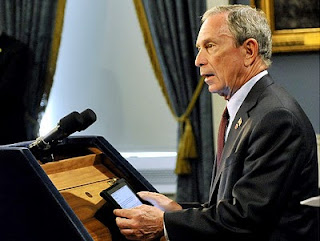
Innovative educators are frustrated when forced to follow political BANdates (i.e. a mandate banning something) such as one that has taken hold across many cities in the nation requiring students to power down at school. In New York City, the largest of these districts, the iPad toting Mayor, Mike Bloomberg relies on the same tools he refuses to let students bring with them to learn in school. While he purports wanting to develop students who are prepared for the 21st century world of career and academic success his technology BANdate prevents students from bringing any personally owned digital devices they may rely on at home into school. There are even metal detectors at schools to ensure the devices they (and he) could depend on for learning are not be used in the classroom. If we really wants our students prepared for the 21st century, then we must speak out against political BANdates. Educators not politicians should be empowered to make the decision about whether they want to allow students to use the tools they need to know how to use in the real world to succeed. Here is why this is so important.

6 Reasons Political BANdates Should Be Broken
  1. BANdates Result in Dropouts
  2. Schools Can Not Offer Real World Opportunities When BANdates Are Enforced
  3. Saying Yes To Students Means Saying No To Political BANdates
  4. Outdated Assessments with Tech BANdates Results in Students Prepared for The Past
  5. Educators Who Think Outside the BAN Are Penalized
  6. Political Bandates Shouldn’t be Driven by Success on Outdated Assessments
1. BANdates Result in Dropouts
If you ask educational visionary Marc Prensky, he’ll say, “Let’s admit the real reason that we ban digital devices is that, given the opportunity to use them, students would vote with their attention, just as adults would ‘vote with their feet’ by leaving the room when a presentation is not compelling.” But students don’t have that option. Unfortunately as NYC DOE Innovation Design Director Jonathan Skolnick, shares, “A traditional compulsory education requires students sit through 12 years of classes they never signed up for.” With
drop out rates nationwide at about one third with many cities having rates hovering closer to 50% of students leaving school, many secondary students are indeed exercising the option to leave. The top reason motivated students with high GPA gave for leaving school is that class were not interesting and students suggest school offer opportunities in alignment with the real world.

2. Schools Can Not Offer Real World Opportunities When BANdates Are Enforced
Without technology, without the ability to connect, without the ability to use the tools necessary for success in the real world, school becomes a place where students feel trapped and disconnected which is why many innovative educators are morally opposed to enforcing political BANdates. Although New Jersey Principal Eric Shenninger knows that “
Banning certainly is the easy way out”he knows educators didn’t get into this work because it is easy. When we ban, nobody has to change the way they do business. Teachers teach the same way. Testing companies test the same way. Politicians measure students the same way and most disturbingly, students are assessed and prepared for a world that no longer exists. When the world inside our schools looks so different than the world in which we live, do we make it our priority to think outside the ban and prepare our students or to we accept our charge to make our students easily and inexpensively measurable political pawns?”

3. Just Say No Is Fine for Drugs, but Not for Technology
Educators and parents who care about preparing students for the 21st century, know it’s time to stop fighting and start allowing students to use the tools they love for learning. If we did we would instantly have an influx in the availability of technology reaching millions if not billions of dollars. Like in the real world, schools would not need to provide tech for everyone, but instead follow the model of internet cafes, libraries, or coffee shops where device-agnostic internet is provided for those with their own equipment and additional devices are available for check out with those in need. Forget the the scary and faux excuse of the needing to secure student data. That can and should be housed separately. Forget hiding behind filtering laws. The internet can be configured to the schools specs. Schools that prioritize this like
The School in Harlem figure it out.

4. Tech BANdates Result in Students Prepared for The Past, Not the Present or Future
When we continue to
assess students using outdated measurements we are imprisoning them to a school life stuck in the past. Sadly, all too frequently I have walked into schools I know have ample technology resources and have not seen a single computer being used. Instead I’ve see kids writing on paper with pens and pencils because “that’s what is used for the test and that’s how we’re judged.” Even schools with the best intentions require students to duplicate efforts because they are judged on outdated assessment. In these schools students are told, go ahead and do your work on the computer as you like, but you must also get practice with paper /pencil since that’s how we are judged. Why are we wasting student’s time? Why aren’t we boycotting outdated assessments created for industrial workers?

5. Educators Who Think Outside the BAN to Empower Students Should Not Be Penalized
Our current system not only is doing a disservice to our students but research shows that innovative educators are being penalized. If teachers empower students to use technology they intuitively know that they will see a dip in the outdated bubble sheet test scores. Though Generation Tech has been scapegoated by some as the reason for declining test scores, when digging a little deeper we can see the research indicates (you can read more
here and here) students who have become proficient using technology will see a decline in paper /pencil tests scores that use outdated assessments. The outdated assessments are keeping our students stuck in the past. We must start to acknowledge that we are not doing what is in the best interest of our children, but rather doing what is easiest and cheapest to provide quantifiable data for politicians and testing companies.

6. Political BANdates Shouldn’t Be Driven By Success on Outdated Assessments
Let’s face it. The impetus for using outdated tests that are no different than those used when compulsory education started in the early 1900s, is that it’s just plain easier and cheaper. It’s easier for testing companies to administer and for politicians to measure the results. When put in perspective it all makes sense for them.
Lifting the ban and allowing students to use technology would make the job of measuring students, teachers, administrators, and politicians more difficult and more costly. Weeding out those teachers who don’t have a passion for test prep is easier than measuring teachers who have a passion for real student learning.

These political BANdates result in the establishment of a workforce of educators that look no different than the those who taught our silver-haired politicians and prepared students for the industrial age of the last century. In fact in our current system innovative educators, creative thinkers, and tech savvy students are severely penalized. They are banned from 1) using technology on the test, 2) working cooperatively as you would in the real world or 3) connecting with those in their personal learning network to solve problems. Can you imagine if the iPad-dependent Mayor of New York City had his technology taken from him prior to a speech? Can you imagine if he was told to prepare for work with out the help of his learning network? If it’s not right for the politicians, then it shouldn’t be right for our students.

Break the Ban and Give Schools The Authority to Empower Students
We will never prepare students for success in the 21st century when we 1) follow political BANdates that prevent students from using the tools we all need to succeed, 2)
filter them from accessing the sites they need to learn (YouTube is the #1 educational site) or 3) prevent them from developing their personal learning networks using social media like Facebook, Twitter, and blogs they need to connect.

What’s good for the politicians IS GOOD FOR OUR STUDENTS. The do as I say, not as I do mantra of the past is no longer acceptable for students who want to spread their own wings doing as they want to say and do to pursue the passions they want to explore.

If we continue abiding by BANdates cultivating students to be prepared for the outdated world that is mandated to exist inside schools, we may make politicians happier, we may making testing companies richer, but we will not be preparing our students for their future or even their present. It’s time to let our students come out of the dark and allow them to power up for learning!

Innovation Revisited - LONG AWAITED SURVEY RESULTS!!!

When I posted a cartoon that included a survey, scads of you responded! (Well, 69 of you ...). This follow-up cartoon has the survey results.

Jeff Branzburg

Saturday, December 18, 2010

Start a Radio Talk Show with Your Cell Phone

I’ve been interested in podcasting for some time now. I have attended workshops, even workshops at the Apple headquarters in New York. I have sat down with experienced podcasters. I have had staff who consider themselves to have expertise in podcasting offer professional development which I've attended, but through all of this, one thing is missing. While creating the audio seems rather clear cut, we never get to actually publishing the podcast. Despite what I’ve heard, this IS NOT easy to do.

Well, with BlogTalkRadio creating your own radio show, which basically a podcast, just got easy. Anyone, anywhere has the ability to host a live, Internet Talk Radio show, simply by using a telephone and a computer. BlogTalkRadio provides seamless integration with leading social networks such as Facebook, Twitter, and Ning, empowers citizen broadcasters to create and share their original content, their voices and their opinions in a public worldwide forum.

BlogTalkRadio is the largest and fastest-growing social radio network on the Internet. A truly democratized medium, BlogTalkRadio has tens of thousands of hosts and millions of listeners tuning in and joining the conversation each month.

For ideas on how you might use this forum, visit Ten Ideas for Educating Innovatively with Phone Casting.

BlogTalkRadio provides thousands of shows for free without needing to download software. Here are some additional features provided.
  1. Live Chat: Lets listeners connect with a community surrounding a show
  2. Show Archive: Listen to live streams or take them with you as MP3, RSS subscription or iTunes
  3. Reminders: Customized alerts by email or phone for upcoming shows
  4. Friends and Favorites; Collect listeners and add your favorite shows
  5. Customizable Profile: Add video, a blog, links to other sites or other widgets
  6. Multiple participants: Receive up to 5 simultaneous guests/listeners on your show
  7. Show Archive: Saved automatically and available as MP3, RSS subscription or iTunes
  8. Friends and Favorites; Collect listeners and add your favorite shows
Just like with podcasting, you can subscribe to a favorite BlogTalkRadio show using iTunes. Just visit the show profile page that you would like to subscribe to. At the top of every profile page is a show name. Next to the show name, there is an orange RSS button and an iTunes button. Clicking on the iTunes icon will open the iTunes software on the computer, and bring up the podcasts section on the iTunes store. Available for viewing is the show information for that particular show, along with a "Subscribe" button right at the top of the iTunes page. Simply click the "Subscribe" to subscribe to the show. A confirmation pop-up window will prompt you to confirm your wish to subscribe. You can then listen to the podcast in your iTunes by visiting your Podcast section of your account. If the arrow next to the show is pointed to the left, click that arrow so it points down and then all of the subscribed podcasts for that show will expand down the page for as many shows as they have available.

Social media is rapidly changing the way we discover, consume and share information. Transforming online monologues into engaging dialogues, social media platforms enable people to connect and communicate in new and innovative ways. Innovative educators and their students can join the discussion and leverage this emerging and highly-effective channel to grow engage and empower learners. The power of BlogTalkRadio can easily enable educators and students to connect with authentic audiences and the school community in new ways.


To participate: