Friday, March 18, 2011

Happy Birthday to The Innovative Educator - 2011

Happy Birthday to The Innovative Educator! You will be three years old tomorrow, March 19th.

It was exactly three years ago tomorrow that The Innovative Educator took its first step in an effort to publicly become a part of the conversation on learning innovatively. As I shared in my post Why I started a blog and why maybe you should too, this blog was born in great part due to the prodding of blogevangelist Will Richardson who I have since named my Blogfather. It was Will who I would run into at events and conferences who would ask, “Have you started sharing your ideas on a blog yet?” and who would write, “if you want your ideas to resonate with me and to be taken seriously, don’t just talk. Engage. Publish. Converse.”

I took Will’s advice and like any proud parent, I can say I’ve learned so much from the experience of giving birth to this new creation that has developed a purposeful and professional digital footprint consisting of more than 600  entries. Now, when I'm Googled, it is me and my blog that comes up on the front page. And, there are all sorts of other important footprints that The Innovative Educator has made. Its print is left on the front page of Google searches like: learning innovatively, cell phones in education, uschooling, passion driving or passion based learning, personal learning networks, ADD/ADHD, shortcomings of interactive whiteboards, and more.

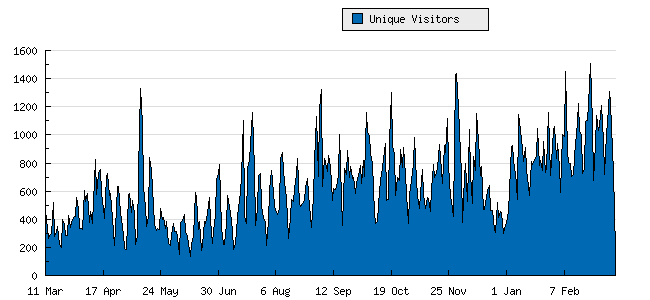
I’ve watched my baby blog grow from no readers to an average of 125 unique visitors a day it’s first year to 336 a day last year to 636 a day this year.
This year I published nearly double the amount of posts as last year with the help of contributors Jeff Branzburg and his provocative digital comics, Jacob Gutnicki and his on-the-ground insights and school-based stories and my newest contributors grown unschooler Kate Berring and unschooling mom Victoria Bergman.  

Among the most popular of posts from The Innovative Educator  this year are listed by category below:

Passion Driven Learning
Profile of a Passion-Driven Student 2011-Jan-2
Preparing Students for Success by Helping Them Discover and Develop Their Passions 2010-Dec-25
Keeping it real. Ideas for Schools, Educators, and Students. 2011-Mar-3
The Answer to Teacher Retention: Find Passion (Not Data) Driven Schools 2011-Feb-13
Differentiating Instruction is NOT Hard if We Tap into Student’s Passions! 2010-Nov-22

Harnessing the Power of Cell Phones for Learning
5 Steps to Harness the Power of Cells in Education Today 2010-Jun-23
Innovative Ways to Engage Learners with Cell Phones Using Research-Based Strategies  2010-Apr-22
It's not a question of if, but when your school will allow cell phones for learning 2010-Jun-24
6 Ways to Use Cell Phones to Strengthen the Home-School Connection 2010-Aug-19 

Unschooling
Learning to Read without School 2011-Jan-9
I Learned How To Write Without School 2011-Jan-27
Profiles of Adults Who Were Passion Driven Students - Their Secret? They Didn’t Go To School. 2011-Jan-8
20 Characteristics I’ve Discovered about Unschoolers and Why Innovative Educators Should Care 2011-Jan-7
We would prefer not to take your tests. 2011-Jan-17
Hey Teacher! Leave Us Kids Alone!!!- There’s A School for That! 2011-Jan-17
What if kids designed their learning? Here are some resources to get started. 2011-Jan-21
5 things I learned about boredom from unschooling 2010-Dec-1

ADD/ADHD
Cure ADHD without Drugs with These Resources from Doctors, Educators, and Parents 2011-Feb-5
Passion (Not Drugs) As Treatment for ADD/ADHD 2011-Jan-25
Sir Ken Robinson Sets Us Straight On What Is Wrong with Education 2011-Jan-21
The War on Kids. Zero Tolerance 2011-Jan-15

Education Reform
20 Ideas for Parents Sick of Waiting for Superman and Tired of Having Their Children Race to Nowhere 2011 -Feb 21
Why Can’t We Empower Parents with the Dollars to Reform Education? 2011-Mar-1
Reforming Reform - Five Ideas for Improving Education 2011-Mar-2
10 Proven Strategies to Break the Ban and Build Opportunities for Student Learning 2010-Nov-3
5 Pieces of Advice for Lawyers Trying to Scare Educators Who Think Outside The Ban 2010-Sep-24

Thursday, March 17, 2011

TESTS, Part II: Failing is not Fun

Vickie Bergman blogs about education and parenting at Demand Euphoria.


In my last post, I explained that one thing tests teach you as a student is that you are on your own. This is terrible enough in itself, as it puts a lot of unnecessary pressure on you for no reason, since these kinds of tests rarely pop up in the adult world. But there is another thing that tests might teach you: that there is something terribly wrong with you if you don't do well on them.

The problem is that all through school, many of the tests given in each subject are basically testing the same things over and over again. Memorizing facts or formulas you probably don't care about, for a short period of time. Or writing coherent and well-formed essays about things you probably don't care about, in 45 minutes or less. Or not getting tricked by questions that were specifically designed to trick you.

So how many tests do you have to take before it's pretty obvious how good or bad you are at these things? I wouldn't be surprised if most students who regularly do poorly on tests know when they are going to fail before they even get to school on test days. I think I can understand a little bit how these kids might feel, because there was one kind of test given twice a year in middle school that was a huge problem for me.

Ever hear of the President's Challenge: Physical Fitness Test (PCPFT)? I still feel sick to my stomach when I think about it, even 16 years later. The mile run would have been horrible enough for me on its own (I always came in last), but it was the pull-ups test that afforded me the most humiliation. The worst part of it was that I already knew I couldn't do any pull-ups. If I could have just told the teacher to write down a zero for me, I would have saved myself a lot of trouble. But not trying was not an option. I had to take my turn pathetically dangling from the bar, hopelessly trying to cause enough vertical movement to have it considered even "half" of a pull-up, looking out at my classmates and knowing that I was failing. With everyone watching. When the teacher was satisfied that indeed I could not do any pull-ups, I was released from the bar and he would issue me a written reminder that I did zero pull-ups. He must not have realized that the zero was already permanently burned into my mind.

I can imagine this is what the "unfortunate speller" feels like when he gets his spelling test back every week with a written reminder that, yep, he still can't spell big and irrelevant words well. Or what the kid who doesn't understand math feels like when the teacher calls on him to answer a question in class. Guess what? We already know what we are bad at! We don't need the reminders, public or private. The PCPFT didn't motivate me to get better at running or doing pull-ups. I hated both of these activities, so I wasn't about to spend any of my free time trying to get better at them. I just stuck with the guaranteed semi-annual embarrassment. In fact, the only thing the test motivated me to do was to skip school on the testing days if I could possibly do so.

But I know I was lucky. I only ever had to face my dreaded tests a handful of times. The kids who feel this kind of dread over academic tests do not get off that easily. They have to face their failures much more regularly, and it must be awful.

Also, I was all right with the fact that I wasn't athletic because I was "smart." I did well on all the other tests, so at least I had that. How bad it must feel for kids who can't do well on academic tests! I can see why all of the low grades and disappointed adults would add up to these poor kids feeling like they are stupid or lazy. Like there is something wrong with them. But really, they just might not be good at the one thing that it takes to be considered smart in school. They can't memorize information and reproduce it correctly under pressure. Why is this the definition of "smart" anyway?

I am not saying that there shouldn't be any tests in life. But why can't childhood look more like adulthood? As adults, we get to choose which activities to pursue and which tests to take. We get to decide if a test is important enough to be worth the studying and the pressure leading up to it. And most importantly, if we don't want to, we don't have to take the ones we know we would fail.

Wednesday, March 16, 2011

10 Implications To Consider Around What School Will Look Like in 2020


Over at ASCD’s Edge Walter McKenzie takes a look at how Andre Mamprin’s 6 Elements of  Knowledge Ecology Framework can inform the transformation of public education in the twenty-first century.  Mamprin has been studying organizational culture and knowledge management over the years, and he has developed this framework designed to transform top-down, hierarchical Industrial Age organizations to lean, informed, responsive organizations for the Information Age.

McKenzie offers these implications as we consider what school will look like by 2020.
Following some of his implications are my reactions.


  1. Public education shares a common vision nationwide
    • Does there really need to be a common vision for the nation, or could different education institutions have different visions?  What is the common vision you were thinking?  
  2. Schools become a network of personal learning communities
    • How are you envisioning a personal learning community?
  3. Trust and risk-taking are modeled by everyone
  4. District and building Leaders are facilitators of inquiry and innovation
  5. Teachers are process experts, not content experts
    • I love the idea of teachers as process experts but would perhaps change the title to learning facilitators and also, expand the idea of who the learning experts are.  They might be community members, students, experts who are skyped in or connected through webinars. It could be an OER class.  
  6. Mentoring takes place at all levels, free of age and grade labels
  7. Students and faculty use their own tools on an accessible campus network
    • I also love the idea of personally owned devices being allowed. I can’t believe districts like the one I work in ban kids from bringing digital devices to school. Our disconnected school environments are not preparing students for their connected world.  
  8. Students and faculty are free to pursue research based on insight
  9. Students and faculty create and publish new knowledge
    • Completely agree that students and faculty must be creating and publishing new knowledge.  This takes care of itself if we take this a step further and just say that there shouldn’t be a line between school life and real life.  If it’s not directly relevant for life (not someday, but today), stop wasting the time of our students.
  10. Public education is a clean, clear connection to college and career readiness
To read the whole post visit Walter McKenzie’s Knowledge - Diversity - Ecology.

Tuesday, March 15, 2011

People do better when they feel smart...even if they don't read on grade level

This post originally appeared on Un-schooled. Kate Fridkis also writes for AOL's MyDaily.com. 


People
do better at life when they feel smart.
When they think they’re
worth a lot.

And it’s really hard to make someone
feel like they’re smart and worthwhile when they
aren’t on the level that the kids who are defined over and over again as
“smart” are on.
And when being “smart” in that way is
so critical to being whole.
When no one is giving anyone an “A” for being hilarious.

I believe in disabilities.
I mean, I don’t think they’re an invention of a cruel, capitalistic, oppressive system. People are all different, and some of them have a lot more trouble with things that are basic for the majority of other people.

But a lot of learning disabilities make me suspicious.
And sometimes they just make me really sad.

When kids aren’t learning to read on time, for example,
there’s a lot of panic.
And there shouldn’t be, because kids learn to read at very
different points.

Some kids don’t learn to read until they’re fourteen,
and then they read like everyone else.
And no one can tell that they were a kid who didn’t read until they were fourteen.

Kids are like that with learning in general.
Not every eight-year-old brain is ready to absorb the information that a nationally approved 3rd grade curriculum demands it process.
And then what happens when they don’t learn it on time?
They learn that they
are “slow.” They might get left behind.

I remember in Hebrew School when I was twelve there was this funny kid
named Seth who was nice to everyone. He made everyone laugh with his
antics. He was good at making ridiculous faces. He was good at people.
And one day the teacher said, “We’re going to go around the room and
each take a paragraph.” We were reading a story about the biblical Jacob
and his very large family.

I showed off, because I was an obnoxious little kid
and I was really good
at reading aloud.
The teacher smiled at me and everyone else silently
hated me with all their brief, concentrated might.
And then it was Seth’s turn.
He was haltingly trying to sound out the first word.

“Is-ra-el-leets.”

We all knew it was wrong.
And there was a long, stunned pause.
How could he not know that?

How could he
barely be able to read?

The Unspoken Promise

Guest post by Jacob Gutnicki

As the sun rose, Superintendent Williams walked outside his house with much on his mind. He did not sleep well last night, as he had to carry through a very difficult decision. In a few hours from now he would shock the community. He would resign from the position of Community Superintendent. He could only imagine the rumors this announcement will inspire.
Matt Williams took a walk and reflected all that happened during his tenure as Superintendent. For seven years he worked tirelessly to change how schools educated children. After much deliberation and discussion he had convinced the community that “we need to look beyond the exams and look inside the child.” That mantra started the change in which schools began to focus on life skills and moved away from the test prep mentality. Numerous schools developed career programs, internships, partnerships with colleges, as well as other interesting opportunities. Numerous education publications lauded his reform efforts.


However, there were several schools that refused to change their ways. One such school was the Burrhus Frederic Skinner High School. Every step of the way Principal Wallstone refused to listen to the Superintendent. She also openly criticized his policies at school board meetings arguing “that monthly testing is the key to student progress.” Additionally, she had business leaders defending her practices making it very difficult to effectuate change at her school.


Despite it all, Superintendent Williams was pleased with the progress his schools made. The Thomas Elkins School of Invention was off to a good start. The school was offering programs and services to high needs students and has been well received by the community.

All of this became irrelevant in the last 24 hours. Yesterday he learned that his youngest son might be grappling with epilepsy. Perchance his son’s school took them to the zoo. When he spoke to the school, the teacher and the aide gave differing accounts of what happened. Additionally, his son recently started taking medicine to manage his on-going problems with Attention Deficit Disorder. Needless to say the recent sequence of events complicated matters. Superintendent Williams was wracked with guilt wondering if he could have done more to help his son with his Attention Deficit Disorder issues. He wondered if the medicine was the right choice and worried that his son may have a mild case of epilepsy. At the same time, he vexed what would happen with the school district in his absence. Ultimately he knew that his child’s welfare deserved his full attention and that he could no longer continue in the position of Community Superintendent. Matt knew that he must keep the unspoken promise every parent makes; protecting their kin by any means necessary.


And so it was. Matt Williams looked at his watch and noted it was time to go. He kissed his wife goodbye, jumped in his car, and headed off to face the media.

“All my life I fought this fight
The fight that no man can never win
Every day it just gets harder to live
This dream I'm believing in”
--Bruce Springsteen, The Promise

Coming Soon- Every Thorn has its Rose

Monday, March 14, 2011

Being Safe Online Is Being Safe In Life

When I advise parents and educators that they should just say yes, when it comes to publishing online, the conversation often defaults to concerns of student safety.  I attribute this in large part to fear of the unknown from those not involved in online environments and the sensationalism of shows like Dateline’s To Catch a Predator.” The reality is that historically children’s names and photographs have been shared for years without negative ramifications.  Think coverage of youth sports programs, celebrations, valedictorians, contest winners etc.  However, when it comes to publishing online often those not deeply literate in such worlds become afraid the unknown.  


If they did know they would discover that student work can and should be published with their full name if that is the choice, or with an alias if there is fear around using a child’s real name.  That all online sites let you control privacy settings if you’d like, but there is something to be said for the idea that’s it’s never too early to start an online digital footprint.  Some say that will be the resume/portfolio of the not-too-distant future.  That it is rare you will find anyone who has run into safety issues as a result of publishing or having a presence online.  Instead, it is a result of the risky or inappropriate behavior in which they engaged.  

Simply put, the lesson is there are few rules unique to ensuring safety online, but rather, the rules are general ones that should be applied online or off.  In short, treat an online environment much as you would a playground or park.  They are fantastic settings for youth to interact, socialize, learn, and connect with new friends.  Adults should ensure the safety of the facility before allowing youth to be there.  Depending on the age of the youth, an adult should be in the vicinity, just in case something unexpected happens.  Children should be careful when talking to strangers and immediately share with an adult if there is anything that seems uncomfortable. Treat others with kindness and respect. Don’t mislead others about your intentions.  Be aware of someone seems out of place or just not right.  Report that to an adult too.  It is really the lessons we’ve been aware of for a long time.  


The difference is that when it comes to online environments, I’ve often heard adults saying and believing they don’t belong there.  Take Facebook for example.  What on earth is going on there.  Parents don’t think they have the right to be their child’s friend.  Educators are being banned from interacting with children for fear that the medium will turn them into some sort of inappropriate molester.  Where has the common sense gone.  We have become a confused society that is banning communication on certain mediums which have no intent, rather than addressing the behaviors we are trying to prevent.  

When educators and students are empowered to use online tools her are some of the terrific things that happen.  
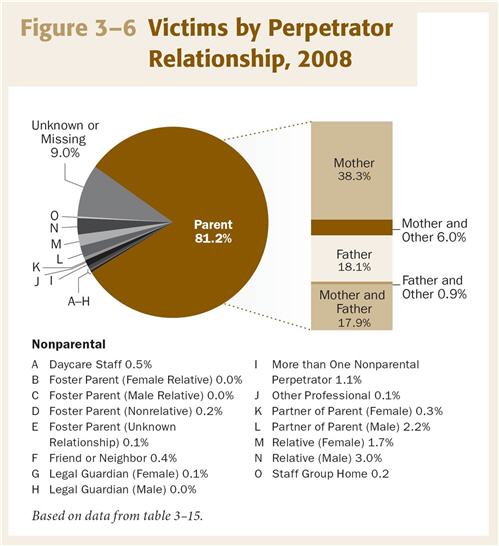
Think about it.  Have you ever known someone who acted appropriately online who ended up in danger?  If your answer is yes, is this really a function of the medium or the behavior which could occur online or offline?  The fact is that if we were really concerned about keeping children safe we wouldn’t be worrying about what they are doing online.  Instead we’d start with the home which is where most cases of child maltreatment occur.  As the below chart from the U.S. Department of Health and Human Services Administration for Children & Families Child Maltreatment Report indicates, 81% of those responsible for the maltreatment of children are indeed the child’s parents (http://www.acf.hhs.gov/programs/cb/pubs/cm08/table3_15.htm, 2009)


David Finkelhor, from the Crimes Against Children Research Center sheds some light on this issues during an interview with SafeKids.com (http://www.safekids.com/2008/05) stating:  

"It's not primarily having a social networking profile or giving out  personal information that puts kids at risk. What puts kids at risk are things     like having a lot of conflict with your parents, being depressed and socially isolated, being hyper, communicating with a lot of people who you don't  know, being willing to talk about sex online with people that you don't know."  


Similarly, the Congressional Internet Caucus Advisory Committee explains it this way:

It’s not giving out personal information that puts kid at risk. It’s not having a blog or a personal website that does that either. What puts kids in danger is being willing to talk about sex online with strangers or having a pattern of multiple risky activities on the web like going to sex sites and chat rooms, meeting lots of people there, kind of behaving in what we call like an internet daredevil.

Over at The Island View blog Tom Whitby says it well in his post The Blame Game. He says that given the hard facts it is clear our best defense for our children is education, not banning. Just as we should we would not ban family reunions, picnics, block parties, or other such functions, the Internet is also something we should not keep away from our children. The internet in general and social media in particular have the ability to not only start a revolution, but revolutionize the world.  It is a tool necessary not only for knowing about politics and elected officials, but one that is necessary if today’s children want to become one.  It is something that enables our children not to just publish for an audience of one (the teacher) or even some (the class), but a tool to connect with, communicate, with and create with others around the world who share their passions, interests, and talents.  


It’s time for adults to stop holding today’s youth in your past and instead join them in their worlds and empower and support them in discovering and developing effective ways to harness their future.