Thursday, October 5, 2017

#NYCSchoolsTechChat: Tech to Connect with Families - Oct 5 at 7pm

We are well into the 2017/18 school year and that means it is time to focus on ideas, tips and strategies for using tech to effectively connect with families.  

#NYCSchoolTech teacher Eileen Lennon (@eileen_lennon) moderates with me throwing in my two cents.

You can prepare for the conversation by thinking about answers to these questions:

Q1. Share tech tools you have used to connect with parents.
Q2. What strategies using tech tools will you implement to connect with parents?
Q3. What support do you need from colleagues to be effective in connecting & communicating with parents?
Q4. Which tech tools can you use with staff for support to connect with parents?
Q5. What challenges have (or could) you face when incorporating tech to connect with parents?
Q6. What are some ideas to overcome challenges one may face when incorporating tech to connect with parents?

Chat details are below:

  • Meeting date/time: Oct 5th at 7:00 pm
  • Topic: #Tech2Connect with Families
  • Your Host: @eileen_lennon (@NYCSchools)
  • Co-Host: @InnovativeEdu (@NYCSchools)
Remember to respond using the hashtag #NYCSchoolsTechChat and include the number of the question you are answering in your response i.e. A1 and your answer.

We hope you can view the chat live, but if you are unable, please visit our archive at
https://www.participate.com/chats/nycschoolstechchat. You can also participate in the chat at that link or if you have an iPhone download the app at https://www.participate.com/apps (coming to Android soon).

Wednesday, September 27, 2017

If These Walls Could Talk...What Messages Can You Share with Staff, Students, & Families?

I had the opportunity to visit Facebook to learn how other school districts and businesses were using Workplace: Facebook's answer to connecting whole organizations with familiar tools like chat, Facebook Live, and groups, so they can turn ideas into action. While it comes with a price tag for businesses, it happens to be free for education institutions. 

But this post isn't about that, it is about the messages you see as you walk around the Facebook offices. These messages come in the form of signs, many created and posted by employees and partners about core values at Facebook. 

You can check out the photos below to see what some of that is and the messages it sends to staff and visitors. As you do, think about what signs your staff might place around your office or school. Or, if you are a teacher, what might students want to post around their classroom? Messages in your schools and classrooms that come from those who work and study in these spaces, helps build culture. And, don't forget to invite your partners, the community and families, to contribute as well.


Sunday, September 24, 2017

Financial Literacy: A Subject Most Students Would #Love2Learn But Never Do


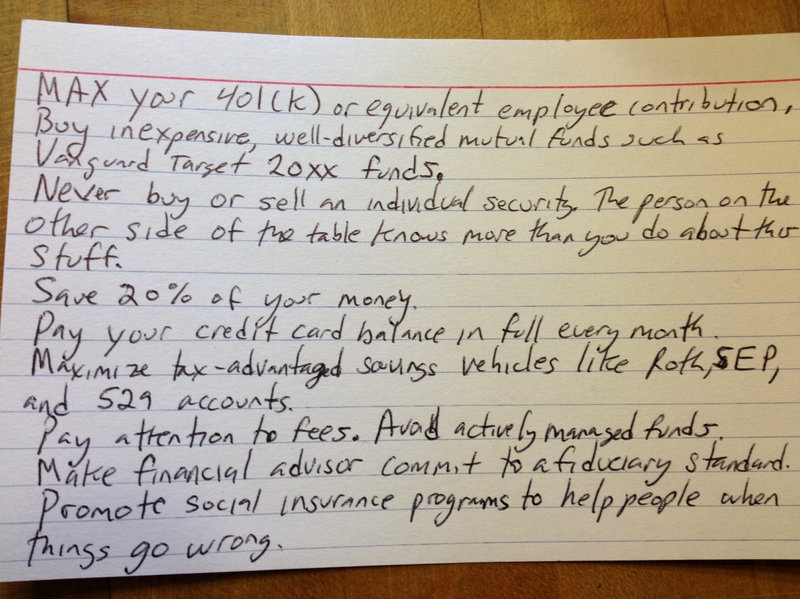
index card.jpg
The book inspired by the card may be found here. The Freakonomics podcast here and the show on NPR here.
It’s no wonder Harold Pollack’s photo of the infamous index card with all the financial advice anyone would ever need, went viral. Americans have a thirst for quick advice on making sound financial decisions. That’s because, when it comes to personal finance, Americans are woefully under-prepared. In fact two-thirds couldn’t even pass a basic financial literacy test. The consequences are evident in the fact that our household debt in our country is at a new peak.

The missing piece in the curriculum

This comes as no surprise. Despite being one of the most important topics to prepare students for success in the world, financial literacy is woefully missing from our curriculum. You won’t find it in many classrooms, nor is it included in many pre-service teaching programs. This despite the fact that students and teachers believe and understand the importance of learning this in school.

Some wonder if this could this be intentional. Hmmm...who could possibly benefit from that?

Some teachers try to combat this by bringing programs into the classroom from learning platforms such as EverFi’s Financial Literacy or they introduce students to popular apps like Credit Stacker. However, giving students an app or providing them with a digital interactive is one thing, but how do you know teachers are really prepared to teach this effectively?

Credentialing teachers in financial literacy

The Global Financial Literacy Excellence Center (GFLEC) at George Washington University has an answer. They have partnered with Digital Promise to provide open access to 20 financial literacy micro-credentials that support educators as they help students develop personal finance skills. The micro-credentials include practical advice on topics such as credit cards, building credit, savings strategies, student loans, tax basics, comparing banking options, and automobile insurance.  
View financial literacy and all the microcredentials on Bloomboard.

Standards alignment

Each micro-credential is research-based, aligned to personal finance national standards, and includes resources to use with students such as simulations, real-world learning, and game-based learning activities.  To earn the micro-credential, educators must submit required information that will be evaluated by assessors using a scoring guide and rubric. Submissions include items such as an explanation of your teaching methods and strategies, work examples and artifacts, and reflections from students and the teacher. Here is a sample of what that looks like for the Banking Services and Costs micro-credential where students compare banking options and select a bank.  

If assessors determine the educator has successfully demonstrated competency, they earn a micro-credential in the form of a digital badge which they can display on their resume, LinkedIn profile, social media sites, and email signature to demonstrate their skillset and stand out from the rest. Because micro-credentials are competency-based, the learning is made visible allowing an interested party to in essence, look under the hood, and see all the elements that lead to acquiring competency in this skill or area. There is also an option to receive graduate credit from accredited university partners such as University of San Diego and Portland State University.

Today’s innovative educators know the importance of teaching digital literacy, computer literacy, media literacy, and news literacy. Now innovative educators have a way to ensure students are prepared for success with financial literacy as well.